
Essential details
Quantity(pieces):1
Shipping:Ocean Shipping
Product Introduction
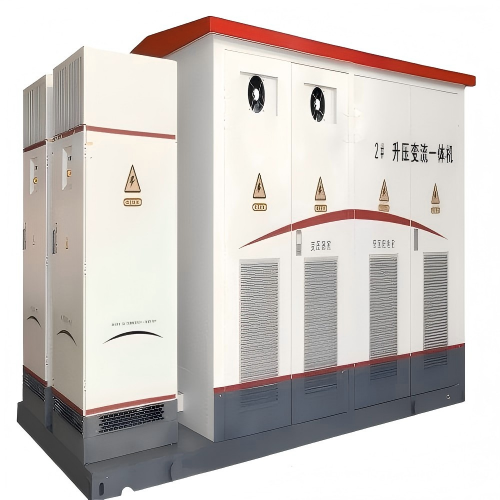
The energy storage box-type substation (referred to as the energy storage box transformer) is an integrated outdoor complete set of equipment that combines traditional box-type substations with electrochemical energy storage. It integrates power conversion, storage, distribution, protection, intelligent scheduling, etc. It is the core equipment for grid connection of new energy, peak load regulation of the power grid, industrial and commercial energy storage, and microgrid power supply.
I. Core Definition and Positioning
Based on the traditional box-type substation (transformer, high and low voltage distribution, protection), it incorporates an energy storage battery pack, a PCS bidirectional converter, a BMS battery management system, an EMS energy management system, temperature control and fire protection modules, etc., to achieve "peak shaving and valley filling, smoothing out the fluctuations of new energy, emergency backup power supply, voltage support, frequency and voltage regulation" and other composite functions. It is factory-prepared and quickly connected on-site, suitable for harsh outdoor environments.
II. System Composition and Integration Architecture
The system adopts modular common box / separate compartment integration. The mainstream is standard containers or integrated box-type structures. The core units include:
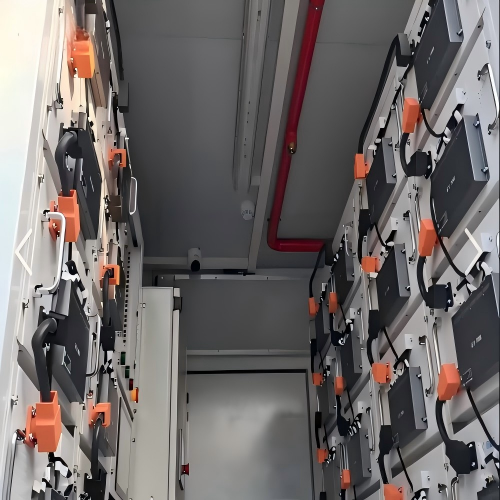
Energy storage battery system: mainly using lithium iron phosphate, consisting of cells, modules, battery clusters / battery stacks, with a capacity covering 50kWh - 5MWh+, achieving power storage and release.
PCS bidirectional converter: completing DC/AC bidirectional conversion, supporting grid connection / off-grid / black start, with fast response and conversion efficiency ≥ 97%, suitable for multiple battery parallel connections.
BMS battery management system: single-cell voltage / current / temperature monitoring, balancing control, overcharge / overdischarge / overtemperature / short-circuit protection, ensuring battery safety and lifespan.
EMS energy management system: intelligent scheduling of charging and discharging, load prediction, grid interaction, remote monitoring and data upload, achieving multi-scenario strategy control.
Substation and distribution unit: including step-up / step-down transformers, high and low voltage switch cabinets, circuit breakers, disconnectors, transformers, meters, reactive power compensation, completing voltage transformation and power distribution.
Auxiliary system: precise temperature control (air conditioning / liquid cooling), fire protection (aerosol / heptafluoropropane), access control, lighting, lightning protection, IP54 + protection, adapting to outdoor temperature and humidity, dust, and salt spray environments.
I. Core Definition and Positioning
Based on the traditional box-type substation (transformer, high and low voltage distribution, protection), it incorporates an energy storage battery pack, a PCS bidirectional converter, a BMS battery management system, an EMS energy management system, temperature control and fire protection modules, etc., to achieve "peak shaving and valley filling, smoothing out the fluctuations of new energy, emergency backup power supply, voltage support, frequency and voltage regulation" and other composite functions. It is factory-prepared and quickly connected on-site, suitable for harsh outdoor environments.
II. System Composition and Integration Architecture
The system adopts modular common box / separate compartment integration. The mainstream is standard containers or integrated box-type structures. The core units include:
Energy storage battery system: mainly using lithium iron phosphate, consisting of cells, modules, battery clusters / battery stacks, with a capacity covering 50kWh - 5MWh+, achieving power storage and release.
PCS bidirectional converter: completing DC/AC bidirectional conversion, supporting grid connection / off-grid / black start, with fast response and conversion efficiency ≥ 97%, suitable for multiple battery parallel connections.
BMS battery management system: single-cell voltage / current / temperature monitoring, balancing control, overcharge / overdischarge / overtemperature / short-circuit protection, ensuring battery safety and lifespan.
EMS energy management system: intelligent scheduling of charging and discharging, load prediction, grid interaction, remote monitoring and data upload, achieving multi-scenario strategy control.
Substation and distribution unit: including step-up / step-down transformers, high and low voltage switch cabinets, circuit breakers, disconnectors, transformers, meters, reactive power compensation, completing voltage transformation and power distribution.
Auxiliary system: precise temperature control (air conditioning / liquid cooling), fire protection (aerosol / heptafluoropropane), access control, lighting, lightning protection, IP54 + protection, adapting to outdoor temperature and humidity, dust, and salt spray environments.
III. Core Technical Parameters (Main Configuration)
Voltage Levels: 10kV/35kV on the high-voltage side, 0.4kV on the low-voltage side; PCS on the DC side ranges from 500V to 1500V.
Energy Storage Capacity: 50kWh - 2.5MWh for a single cell, up to 10MWh+ when multiple cells are connected in parallel.
Converter Power: 250kW - 2.5MW, supporting multi-machine parallel expansion.
Operating Modes: Grid connection (self-generation and self-consumption, surplus power fed back to the grid, peak and frequency regulation), off-grid, micro-grid, black start, emergency backup power supply.
Protection Level: IP54 - IP56, anti-corrosion, waterproof, shock-resistant, suitable for -30℃ to +55℃ environments.
Response Time: Millisecond-level charging and discharging response, meeting the needs of grid frequency regulation and smoothing out fluctuations in new energy.
IV. Core Advantages
High Integration, Minimal Floor Space: Integrated design, occupying only 1/3 - 1/2 of the floor space compared to decentralized energy storage + substation, suitable for narrow sites.
Factory Prefabrication, Rapid Deployment: Factory completion of wiring, debugging and testing, on-site only requires positioning, connecting cables, and grid connection. The construction period is reduced from several months to 1 - 2 weeks.
Comprehensive Functions, Diverse Value: Combining power transformation, energy storage, protection, and dispatching, achieving peak shaving and valley filling, new energy absorption, voltage support, emergency backup power supply, and demand-side response.
Safe and Reliable, Simple Maintenance: Multiple levels of protection (electrical + battery + fire protection), remote monitoring, fault warning, requiring no daily maintenance, reducing the total life cycle cost.
Flexible Adaptation, Expandable: Modular design, supporting capacity/power combination as needed, can be connected in parallel for expansion, suitable for both distributed and centralized scenarios.
V. Main Application Scenarios
New Energy Integration: Grid connection of photovoltaic / wind power, smoothing out power fluctuations, improving energy absorption rate, meeting grid connection requirements.
Grid Side: Peak shaving, frequency regulation, voltage regulation, backup power supply, alleviating line congestion, improving grid stability.
Industrial and Commercial Users: Peak-valley arbitrage, demand management, emergency backup power supply, reducing electricity costs, ensuring power supply for critical loads.
Microgrid and Off-grid: Islands, remote areas, mining areas, construction temporary power supply, building an independent power supply system.
Urban Distribution Network: Old residential area renovation, charging station clusters, data centers, commercial complexes, improving power supply reliability and power quality.
VI. Technical Limitations
Capacity Constraints: The power/capacity of a single cell is limited by the box and heat dissipation; for larger capacities, multiple cells need to be connected in parallel.
Heat Dissipation Dependency: Heat from batteries and PCS is concentrated, requiring reliable temperature control; extreme high/low temperature environments require enhanced design.
Maintenance Constraints: High integration, core components' failures often require professional teams or factory repairs, making deep-site maintenance difficult.
VII. Development Trends
Towards higher safety (new batteries + fire protection), higher integration (converter and inverter integration), intelligentization (AI scheduling, predictive maintenance), environmental friendliness (no cobalt / recyclable batteries), and larger capacity, adapting to new power systems and the "dual carbon" goals.
Voltage Levels: 10kV/35kV on the high-voltage side, 0.4kV on the low-voltage side; PCS on the DC side ranges from 500V to 1500V.
Energy Storage Capacity: 50kWh - 2.5MWh for a single cell, up to 10MWh+ when multiple cells are connected in parallel.
Converter Power: 250kW - 2.5MW, supporting multi-machine parallel expansion.
Operating Modes: Grid connection (self-generation and self-consumption, surplus power fed back to the grid, peak and frequency regulation), off-grid, micro-grid, black start, emergency backup power supply.
Protection Level: IP54 - IP56, anti-corrosion, waterproof, shock-resistant, suitable for -30℃ to +55℃ environments.
Response Time: Millisecond-level charging and discharging response, meeting the needs of grid frequency regulation and smoothing out fluctuations in new energy.
IV. Core Advantages
High Integration, Minimal Floor Space: Integrated design, occupying only 1/3 - 1/2 of the floor space compared to decentralized energy storage + substation, suitable for narrow sites.
Factory Prefabrication, Rapid Deployment: Factory completion of wiring, debugging and testing, on-site only requires positioning, connecting cables, and grid connection. The construction period is reduced from several months to 1 - 2 weeks.
Comprehensive Functions, Diverse Value: Combining power transformation, energy storage, protection, and dispatching, achieving peak shaving and valley filling, new energy absorption, voltage support, emergency backup power supply, and demand-side response.
Safe and Reliable, Simple Maintenance: Multiple levels of protection (electrical + battery + fire protection), remote monitoring, fault warning, requiring no daily maintenance, reducing the total life cycle cost.
Flexible Adaptation, Expandable: Modular design, supporting capacity/power combination as needed, can be connected in parallel for expansion, suitable for both distributed and centralized scenarios.
V. Main Application Scenarios
New Energy Integration: Grid connection of photovoltaic / wind power, smoothing out power fluctuations, improving energy absorption rate, meeting grid connection requirements.
Grid Side: Peak shaving, frequency regulation, voltage regulation, backup power supply, alleviating line congestion, improving grid stability.
Industrial and Commercial Users: Peak-valley arbitrage, demand management, emergency backup power supply, reducing electricity costs, ensuring power supply for critical loads.
Microgrid and Off-grid: Islands, remote areas, mining areas, construction temporary power supply, building an independent power supply system.
Urban Distribution Network: Old residential area renovation, charging station clusters, data centers, commercial complexes, improving power supply reliability and power quality.
VI. Technical Limitations
Capacity Constraints: The power/capacity of a single cell is limited by the box and heat dissipation; for larger capacities, multiple cells need to be connected in parallel.
Heat Dissipation Dependency: Heat from batteries and PCS is concentrated, requiring reliable temperature control; extreme high/low temperature environments require enhanced design.
Maintenance Constraints: High integration, core components' failures often require professional teams or factory repairs, making deep-site maintenance difficult.
VII. Development Trends
Towards higher safety (new batteries + fire protection), higher integration (converter and inverter integration), intelligentization (AI scheduling, predictive maintenance), environmental friendliness (no cobalt / recyclable batteries), and larger capacity, adapting to new power systems and the "dual carbon" goals.