
Essential details
Shipping:Sea freight
Package Description:wooden case
Product Introduction
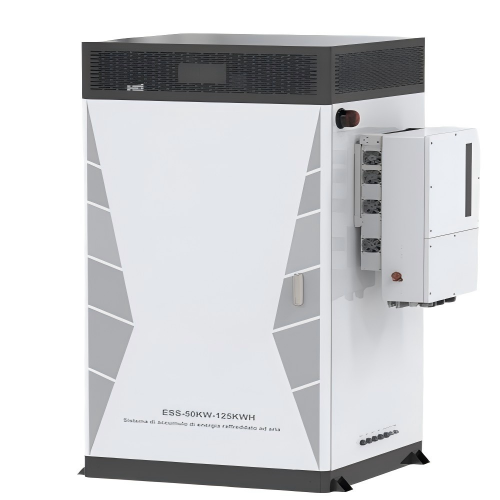
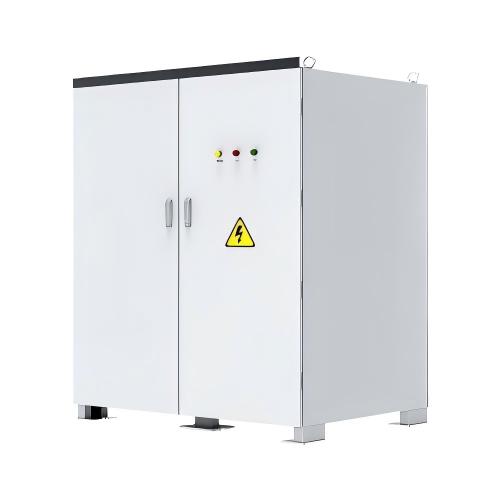
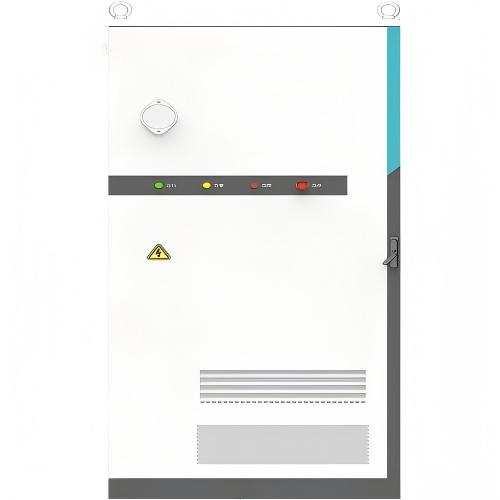
The energy storage cabinet is officially called the integrated cabinet for electrochemical energy storage system. It is based on lithium-ion batteries as the core, integrating battery clusters, battery management system (BMS), energy storage converter (PCS), energy management system (EMS), temperature control system, fire protection system, and power distribution unit. It is a standardized energy storage device that mainly realizes functions such as electricity storage, peak shaving and valley filling, demand response, backup power supply, photovoltaic integration, and grid frequency regulation and phase adjustment. It is widely applied in industrial power distribution, industrial parks, data centers, photovoltaic power stations, microgrids, and new power systems, etc.
I. Product Basic Composition
1. Battery System: Mainly uses lithium iron phosphate battery modules, featuring high safety, long cycle life, and good low-temperature performance, which is the core carrier for energy storage.
2. Battery Management System (BMS): Monitors individual cell voltage, temperature, and current in real time, achieving balanced control, overcharge/overdischarge protection, short circuit protection, and fault warning.
3. Energy Storage Converter (PCS): Completes AC/DC conversion, controls charging and discharging power, and realizes stable connection with the grid/load.
4. Energy Management System (EMS): Intelligently schedules charging and discharging strategies, supports peak-valley arbitrage, demand control, remote monitoring, and coordinated operation and maintenance.
5. Temperature Control System: Includes air cooling and liquid cooling forms, ensuring the battery operates within an appropriate temperature range, enhancing lifespan and safety.
6. Fire Protection and Security System: Equipped with aerosol, perfluorohexane, or water cooling fire protection, combined with smoke detectors, temperature detectors, and combustible gas detection, achieving multi-level safety protection.
7. Distribution and Structural Units: Includes circuit breakers, lightning protection, grounding, and high-strength cabinets, with protection grades mostly IP54/IP55, suitable for indoor and outdoor environments.
1. Battery System: Mainly uses lithium iron phosphate battery modules, featuring high safety, long cycle life, and good low-temperature performance, which is the core carrier for energy storage.
2. Battery Management System (BMS): Monitors individual cell voltage, temperature, and current in real time, achieving balanced control, overcharge/overdischarge protection, short circuit protection, and fault warning.
3. Energy Storage Converter (PCS): Completes AC/DC conversion, controls charging and discharging power, and realizes stable connection with the grid/load.
4. Energy Management System (EMS): Intelligently schedules charging and discharging strategies, supports peak-valley arbitrage, demand control, remote monitoring, and coordinated operation and maintenance.
5. Temperature Control System: Includes air cooling and liquid cooling forms, ensuring the battery operates within an appropriate temperature range, enhancing lifespan and safety.
6. Fire Protection and Security System: Equipped with aerosol, perfluorohexane, or water cooling fire protection, combined with smoke detectors, temperature detectors, and combustible gas detection, achieving multi-level safety protection.
7. Distribution and Structural Units: Includes circuit breakers, lightning protection, grounding, and high-strength cabinets, with protection grades mostly IP54/IP55, suitable for indoor and outdoor environments.
II. Main Technical Features
Safe and Reliable: Multi-level electrical protection + complete fire protection design, flame retardant and explosion-proof, meeting the requirements for indoor and densely populated areas.
Efficient and Energy-Efficient: High charging and discharging efficiency, the system efficiency can usually reach over 90%, the liquid-cooled model has lower energy consumption and smaller temperature difference.
Intelligent Operation and Maintenance: Supports local display, remote monitoring, data upload, and fault diagnosis, and can be connected to the cloud platform for centralized management.
Modular Design: Capacity and power can be flexibly configured, supports multi-cabinet parallel expansion, deployment is fast and plug-and-play.
Strong Environmental Adaptability: Can operate in a temperature range of -20℃ to 55℃, dust-proof, waterproof, and corrosion-resistant, suitable for industrial and outdoor complex conditions.
Green and Environmentally Friendly: Oil-free, no leakage, low noise, in line with low-carbon energy-saving and dual-carbon policy requirements.
III. Cooling Method Classification
1. Air-cooled Energy Storage Cabinet: Relying on forced ventilation by fans for heat dissipation, the structure is simple and the cost is low, suitable for small and medium capacity and scenarios with cost sensitivity.
2. Liquid-cooled Energy Storage Cabinet: Heat dissipation through liquid cooling plates / liquid cooling pipelines, with high temperature control accuracy, low noise, and uniform heat dissipation, suitable for large capacity, high power, and long-term operation industrial and large-scale energy storage projects.
IV. Capacity and Power Range
Industrial and Commercial Integrated Machine: Common capacity is 100kWh to 1MWh, power is 50kW to 500kW.
Large-scale Energy Storage Cabinet / Cabinet-style: Capacity can reach over 2MWh, mostly used for power station-level and park centralized energy storage.
V. Typical Application Scenarios
Industrial and Commercial Peak Load Shifting and Fill-in, reducing electricity costs and demand charge costs;
Combined with photovoltaic power generation for self-consumption, improving the utilization rate of new energy;
Hospitals, data centers, communication base stations as backup power sources;
Micro-grid, off-grid power stations, and charging station supporting energy storage;
Grid-side frequency regulation, phase regulation, voltage regulation, and emergency response.
VI. Summary of Core Advantages
Energy storage cabinets can effectively smooth out load fluctuations, reduce grid expansion investment, improve power supply reliability, and lower electricity costs. They are the core key equipment in current new distribution systems, energy-saving renovations, and carbon neutrality projects.
Safe and Reliable: Multi-level electrical protection + complete fire protection design, flame retardant and explosion-proof, meeting the requirements for indoor and densely populated areas.
Efficient and Energy-Efficient: High charging and discharging efficiency, the system efficiency can usually reach over 90%, the liquid-cooled model has lower energy consumption and smaller temperature difference.
Intelligent Operation and Maintenance: Supports local display, remote monitoring, data upload, and fault diagnosis, and can be connected to the cloud platform for centralized management.
Modular Design: Capacity and power can be flexibly configured, supports multi-cabinet parallel expansion, deployment is fast and plug-and-play.
Strong Environmental Adaptability: Can operate in a temperature range of -20℃ to 55℃, dust-proof, waterproof, and corrosion-resistant, suitable for industrial and outdoor complex conditions.
Green and Environmentally Friendly: Oil-free, no leakage, low noise, in line with low-carbon energy-saving and dual-carbon policy requirements.
III. Cooling Method Classification
1. Air-cooled Energy Storage Cabinet: Relying on forced ventilation by fans for heat dissipation, the structure is simple and the cost is low, suitable for small and medium capacity and scenarios with cost sensitivity.
2. Liquid-cooled Energy Storage Cabinet: Heat dissipation through liquid cooling plates / liquid cooling pipelines, with high temperature control accuracy, low noise, and uniform heat dissipation, suitable for large capacity, high power, and long-term operation industrial and large-scale energy storage projects.
IV. Capacity and Power Range
Industrial and Commercial Integrated Machine: Common capacity is 100kWh to 1MWh, power is 50kW to 500kW.
Large-scale Energy Storage Cabinet / Cabinet-style: Capacity can reach over 2MWh, mostly used for power station-level and park centralized energy storage.
V. Typical Application Scenarios
Industrial and Commercial Peak Load Shifting and Fill-in, reducing electricity costs and demand charge costs;
Combined with photovoltaic power generation for self-consumption, improving the utilization rate of new energy;
Hospitals, data centers, communication base stations as backup power sources;
Micro-grid, off-grid power stations, and charging station supporting energy storage;
Grid-side frequency regulation, phase regulation, voltage regulation, and emergency response.
VI. Summary of Core Advantages
Energy storage cabinets can effectively smooth out load fluctuations, reduce grid expansion investment, improve power supply reliability, and lower electricity costs. They are the core key equipment in current new distribution systems, energy-saving renovations, and carbon neutrality projects.