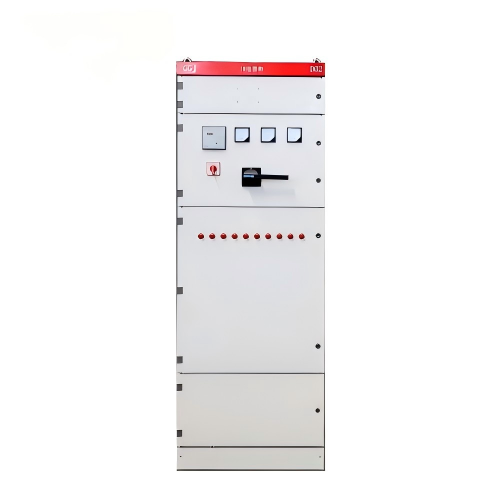

The GGJ low-voltage reactive power intelligent compensation device is a complete set of energy-saving equipment for 0.4kV/0.66kV low-voltage power distribution systems. It is centered around a microcomputer intelligent controller and automatically switches capacitor banks to precisely track changes in reactive load, achieving an increase in power factor, reduction in line loss, and improvement of power quality. It is widely used in industrial enterprises, commercial buildings, and renewable energy grid connections, among other scenarios.
I. Scope of Application and Execution Standards
Rated Voltage: AC 380V/400V/660V (≤1000V)
Rated Frequency: 50Hz/60Hz
Compensation Capacity: 15 - 600 kvar per cabinet (expandable through multiple cabinets connected in parallel)
Compatible Transformers: Mainly 100 - 630 kVA three-phase transformers
enforce standards
GB 7251.12-2013 "Low-Voltage Switchgear and Controlgear - Part 2"
GB/T 15576-2008 "Low-Voltage Reactive Power Compensation Devices"
IEC 60439 series standards
II. Core Technical Parameters
Rated Voltage: 380/400V (AC), 660V (optional)
Compensation Capacity: 15~600kvar per cabinet (single group 5~60kvar)
Shunt Mode: Static/Dynamic selectable, response time ≤ 20ms
Control Circuit: 1~16 circuits, supports phase-separated/mixed compensation
Measurement Accuracy: Voltage ±0.5%, Current/Reactive Power ±1%
Power Factor: Rated value increased to above 0.95 (default 0.9)
Operating Environment: -25℃ to +55℃, humidity ≤ 95%RH (no condensation)
Protection Grade: Cabinet IP30/IP40, internal IP4X
Busbar Specifications: Horizontal/Concentrated 60×8mm, N/PE 40×6mm
Cabinet Dimensions: Height 1200~2300mm × Width 400~1200mm × Depth 300~1000mm
III. Structural Composition (Modular Integration)
1. Intelligent Control Unit
Core: DSP/ARM high-speed controller, real-time collection of voltage, current, power factor
Function: Automatic discrimination of reactive power demand, control of capacitor bank according to cycle switching / optimal switching strategy
Display: Real-time feedback of power factor (0.00 - 0.99 lagging / leading), capacitor switching status
Communication: RS485 interface, supports Modbus protocol, enables remote monitoring
2. Capacitor Compensation Unit
Core Components: Self-healing low-voltage parallel capacitor (Y/△ connection)
Switching Devices:
Static: Contactors / Composite Switches (no inrush current switching)
Dynamic: Thyristor Switching Capacitor (TSC, fast response, no arc)
Accessories: Series reactor (to suppress harmonics, prevent resonance, optional)
3. Protection and Auxiliary Unit
Comprehensive Protection: Overvoltage, undervoltage, overcurrent, short circuit, phase loss, overload, harmonic over-limit, over-compensation
Auxiliary Modules: Temperature control cooling fan, Surge Protector (SPD), Fault Alarm Output
4. Cabinet Structure
Material: Cold-rolled steel plate, modular assembly, high strength, standardized wiring
Partitioning: Busbar room, capacitor room, control room, cable room, safe isolation against electric arc
IV. Core Performance Advantages
1. Intelligent and precise compensation automatically tracks load changes, with phase-by-phase / mixed compensation capable of adapting to three-phase unbalanced loads, maintaining a power factor of above 0.95.
2. Significant energy savings and efficiency improvements reduce line losses by 10% to 30%, enhance transformer load capacity by 15% to 20%, and reduce electricity expenses.
3. Harmonic mitigation capability: Selectable series reactors can suppress 5/7th harmonic frequencies, prevent capacitor resonance, and be suitable for harmonic scenarios such as variable frequency drives and rectification equipment.
4. Safe and reliable multiple protection mechanisms + mechanical/electrical interlocks prevent over-connection, under-connection, and equipment damage; memory power-off parameters, and automatic operation upon power restoration, without the need for on-site monitoring.
5. Flexible expansion: Modular units are supported by hot-swappable maintenance, a single group failure does not affect the overall system; multiple cabinets in parallel can be expanded to a megawatt-level capacity.
V. Typical Application Scenarios
1. Industrial Sector
Metallurgy, chemical industry, automotive manufacturing workshops, suitable for rolling mills, electric arc furnaces, frequency converters, etc., which are impactive/non-linear loads.
2. Commercial and Civil Buildings
Large shopping malls, hospitals, data centers, office buildings, suitable for air conditioners, elevators, lighting, etc., mixed loads.
3. Grid Integration of New Energy
Low-voltage side of photovoltaic/wind power stations, to smooth reactive power fluctuations and ensure stable grid voltage.
4. Industrial and Public Facilities
Factory substations, high-rise building power centers, subways/tunnels, to meet high reliability power supply requirements.
VI. Selection and Configuration Key Points
1. Capacity Calculation
Calculate the required reactive power capacity based on load type (motor / rectifier / air conditioner) and power factor target (≥0.95), and reserve 10% - 20% margin.
2. Switching Mode Selection
Stable load: Composite switch / contactor (economical and practical)
Fast load change: TSC dynamic compensation (response ≤ 20ms)
Harmonic-containing scenarios: Add 7% - 14% series reactors.
3. Protection Configuration Must include overvoltage / undervoltage, phase failure protection; increase harmonic limit alarm in harmonic environment; important loads should be equipped with fault linkage tripping.
VII. Summary
The GGJ low-voltage reactive power intelligent compensation device is centered on intelligent control, efficient compensation, and safety reliability. It is an essential energy-saving equipment for low-voltage distribution systems. It is suitable for various scenarios that need to improve power factor, reduce line loss, and optimize power quality. It can be directly matched with 100 - 630 kVA transformers and help enterprises achieve cost reduction, efficiency improvement, and compliant electricity usage.