
Essential details
Quantity(pieces):1
Shipping:Sea Freight
Package Description:wooden case
Product Introduction
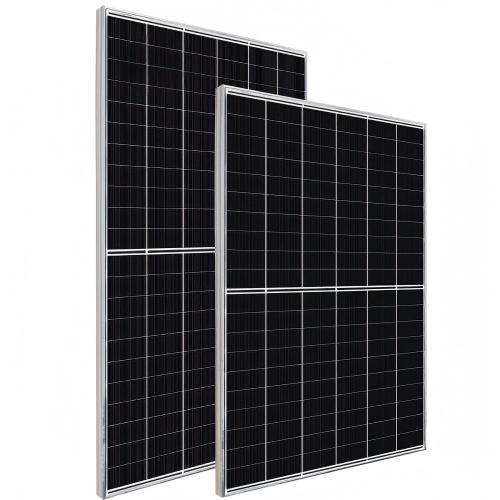
Solar photovoltaic panels (also known as solar cell modules) are core power generation devices that directly convert solar radiation energy into direct current electricity through the photoelectric effect. They are the basic units of photovoltaic power stations, household photovoltaic systems, industrial and commercial distributed photovoltaic systems, and various solar application systems. The products are based on crystalline silicon solar cells, which are encapsulated, laminated, and assembled to have high photoelectric conversion efficiency, long service life, and stable operation. They are widely used in ground-based power stations, industrial and commercial factory rooftops, household rooftops, photovoltaic building integration (BIPV), off-grid lighting, charging point accessories, and new energy microgrids.
I. Product Structure Composition
The photovoltaic panel mainly consists of tempered glass, EVA adhesive film, solar cells, backsheet, aluminum alloy frame, junction box, and silicone sealant. Tempered glass and the backsheet play the roles of protection, waterproofing, and weather resistance; EVA adhesive film is used to fix the cells and improve light transmittance; the solar cells are the core of photoelectric conversion; the junction box contains a bypass diode to prevent hot spot effects and lead out electricity; the aluminum alloy frame enhances mechanical strength and facilitates installation and fixation.
II. Main Types and Technical Routes
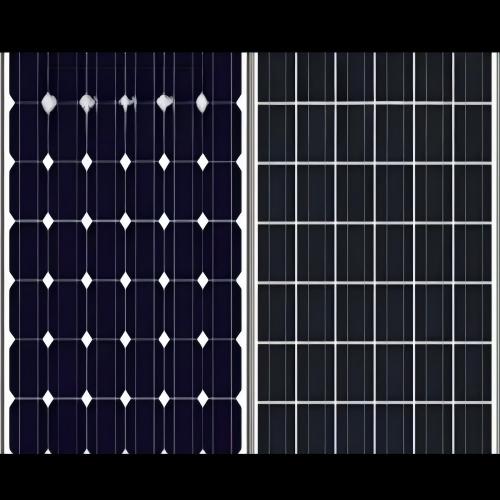
1. Monocrystalline silicon photovoltaic modules are made with monocrystalline silicon wafers, featuring high conversion efficiency, good low-light performance, low power degradation, and uniform appearance color. They are currently the mainstream products in the market and are widely used in household and large-scale power stations, with the best overall cost performance.
2. Polycrystalline silicon photovoltaic modules are made with polycrystalline silicon wafers, with relatively lower manufacturing costs, slightly lower efficiency than monocrystalline silicon, stable performance in strong light environments, and mostly used in large-scale ground-based photovoltaic power stations.
3. High-efficiency modules include TOPCon, HJT (heterojunction), IBC, etc., with conversion efficiency significantly higher than conventional modules, higher power, lower temperature coefficient, and obvious long-term power generation advantages, suitable for industrial and commercial and large-scale power station projects with limited space and high power generation yield requirements.
III. Core Technical Characteristics
High photoelectric conversion efficiency: Mainstream single-crystal modules can achieve efficiency of over 22%, and high-efficiency modules can exceed 25%. The unit area power generation capacity continues to increase.
Long service life: Design service life of 25-30 years, low annual power degradation rate, stable operation and reliability over the long term.
Strong environmental adaptability: Can work in environments ranging from -40°C to 85°C, resistant to wind, pressure, hail, waterproof, and moisture-proof, suitable for harsh outdoor environments.
Safe and reliable: Possess anti-PID, anti-hot spot, insulation and voltage withstand performance, high fire resistance, no noise or pollution during operation.
Green and low-carbon: The power generation process does not consume fossil energy, has no emissions, and no waste, and is an important clean energy equipment for achieving carbon neutrality.
IV. Conventional Specifications Parameters
Power range: Mainstream is 400W-700W, and high-power modules can reach over 700W.
Working voltage: The working voltage of the module is mostly around 24V or 36V, and the system can be connected in series or parallel to adapt to different voltage levels.
Appearance size: Increases with power, with a conventional size of approximately 1722mm×1134mm×35mm, and large-size modules are used for large-scale power stations.
Output type: Standard direct current output, which can be converted into alternating current for grid connection or use by loads through an inverter.
V. Typical Application Scenarios
Household rooftop photovoltaic: Self-generation and self-consumption, with surplus electricity fed back to the grid, reducing household electricity costs.
Industrial and commercial factory rooftop: Peak shaving and valley filling, saving enterprise electricity costs, and achieving energy conservation and carbon reduction.
Ground centralized photovoltaic power stations: Large-scale grid connection power generation, participating in grid power supply.
Photovoltaic building integration (BIPV): Replacing building materials, achieving integration of building and power generation.
Off-grid photovoltaic systems: Used for remote area power supply, street lights, surveillance, communication base stations, and other scenarios without power grids.
VI. Summary of Product Advantages Solar photovoltaic panels have the advantages of zero fuel consumption, zero emission pollution, easy installation, simple maintenance, and wide application scenarios. They can generate electricity independently or be connected to the power grid for use. They are currently the most widely promoted and most mature renewable energy equipment globally, and are of great significance for promoting the transformation of the energy structure and achieving the dual carbon goals.
I. Product Structure Composition
The photovoltaic panel mainly consists of tempered glass, EVA adhesive film, solar cells, backsheet, aluminum alloy frame, junction box, and silicone sealant. Tempered glass and the backsheet play the roles of protection, waterproofing, and weather resistance; EVA adhesive film is used to fix the cells and improve light transmittance; the solar cells are the core of photoelectric conversion; the junction box contains a bypass diode to prevent hot spot effects and lead out electricity; the aluminum alloy frame enhances mechanical strength and facilitates installation and fixation.
II. Main Types and Technical Routes
1. Monocrystalline silicon photovoltaic modules are made with monocrystalline silicon wafers, featuring high conversion efficiency, good low-light performance, low power degradation, and uniform appearance color. They are currently the mainstream products in the market and are widely used in household and large-scale power stations, with the best overall cost performance.
2. Polycrystalline silicon photovoltaic modules are made with polycrystalline silicon wafers, with relatively lower manufacturing costs, slightly lower efficiency than monocrystalline silicon, stable performance in strong light environments, and mostly used in large-scale ground-based photovoltaic power stations.
3. High-efficiency modules include TOPCon, HJT (heterojunction), IBC, etc., with conversion efficiency significantly higher than conventional modules, higher power, lower temperature coefficient, and obvious long-term power generation advantages, suitable for industrial and commercial and large-scale power station projects with limited space and high power generation yield requirements.
III. Core Technical Characteristics
High photoelectric conversion efficiency: Mainstream single-crystal modules can achieve efficiency of over 22%, and high-efficiency modules can exceed 25%. The unit area power generation capacity continues to increase.
Long service life: Design service life of 25-30 years, low annual power degradation rate, stable operation and reliability over the long term.
Strong environmental adaptability: Can work in environments ranging from -40°C to 85°C, resistant to wind, pressure, hail, waterproof, and moisture-proof, suitable for harsh outdoor environments.
Safe and reliable: Possess anti-PID, anti-hot spot, insulation and voltage withstand performance, high fire resistance, no noise or pollution during operation.
Green and low-carbon: The power generation process does not consume fossil energy, has no emissions, and no waste, and is an important clean energy equipment for achieving carbon neutrality.
IV. Conventional Specifications Parameters
Power range: Mainstream is 400W-700W, and high-power modules can reach over 700W.
Working voltage: The working voltage of the module is mostly around 24V or 36V, and the system can be connected in series or parallel to adapt to different voltage levels.
Appearance size: Increases with power, with a conventional size of approximately 1722mm×1134mm×35mm, and large-size modules are used for large-scale power stations.
Output type: Standard direct current output, which can be converted into alternating current for grid connection or use by loads through an inverter.
V. Typical Application Scenarios
Household rooftop photovoltaic: Self-generation and self-consumption, with surplus electricity fed back to the grid, reducing household electricity costs.
Industrial and commercial factory rooftop: Peak shaving and valley filling, saving enterprise electricity costs, and achieving energy conservation and carbon reduction.
Ground centralized photovoltaic power stations: Large-scale grid connection power generation, participating in grid power supply.
Photovoltaic building integration (BIPV): Replacing building materials, achieving integration of building and power generation.
Off-grid photovoltaic systems: Used for remote area power supply, street lights, surveillance, communication base stations, and other scenarios without power grids.
VI. Summary of Product Advantages Solar photovoltaic panels have the advantages of zero fuel consumption, zero emission pollution, easy installation, simple maintenance, and wide application scenarios. They can generate electricity independently or be connected to the power grid for use. They are currently the most widely promoted and most mature renewable energy equipment globally, and are of great significance for promoting the transformation of the energy structure and achieving the dual carbon goals.