
Essential details
Quantity(pieces):1
Shipping:Sea transport
Package Description:wooden case
Product Introduction
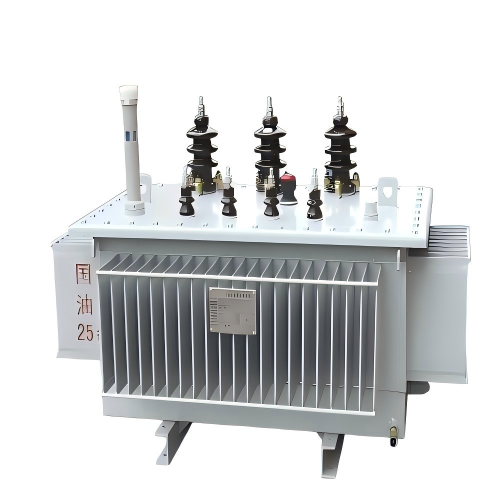
This series is a three-phase oil-immersed self-cooling non-excited voltage-regulating amorphous alloy distribution transformer, suitable for the AC 50Hz power system. It covers three mainstream voltage levels on the high-voltage side: 6kV, 10kV, and 20kV. The low-voltage side uniformly outputs 0.4kV. Its core functions are power reduction, distribution, and control. It is widely used in urban and rural power grids, industrial and mining enterprises, industrial parks, residential areas, photovoltaic/wind power box transformers, and various distribution projects. The product uses amorphous alloy as the core material. It is iteratively classified as SH15, SH21, and SH25 based on energy-saving levels, with decreasing losses and continuous improvement in energy efficiency. The entire series adopts a fully sealed structure, ensuring reliable operation, maintenance-free, and strong resistance to short circuits. It complies with current national energy efficiency standards and environmental protection requirements, and is suitable for different budget and energy-saving requirements distribution projects.
I. Application Scope
The high-voltage rated voltage covers 6kV, 10kV, and 20kV. The low-voltage rated voltage is 0.4kV. The rated frequency is 50Hz. The capacity range covers 30kVA to 2500kVA, meeting the distribution needs of different scales. The cooling method is oil-immersed self-cooling (ONAN). The connection group is preferably Dyn11, and Yyn0 can be configured according to requirements. The voltage regulation method is non-excited voltage regulation, with a regulation range of ±2×2.5% or ±5%. The usage environment is flexible, capable of being installed indoors, outdoors, or in box-type substations. It can also adapt to complex environments such as high-altitude, conventional, and mild pollution, with extremely strong adaptability.
II. Model Meaning
Take SH25-M-630/10 as an example. The meaning of each part of the model is as follows: S represents a three-phase oil-immersed transformer; H represents amorphous alloy core; 25 represents the design sequence number, corresponding to the loss and energy efficiency level; M represents a fully sealed structure; 630 represents the rated capacity of 630kVA; 10 represents the rated voltage of the high-voltage side of 10kV. Other models follow the same pattern, with only differences in the design sequence number (energy efficiency level), rated capacity, and high-voltage voltage level. The structure and core principle remain the same.
III. Energy Efficiency Levels and Loss Characteristics
This series strictly follows GB 20052-2024 "Energy Efficiency Limits and Energy Efficiency Levels for Power Transformers" and GB/T 25446-2010 "Technical Parameters and Requirements for Oil-immersed Amorphous Alloy Core Distribution Transformers". According to the energy-saving level, they are SH15, SH21, and SH25 in sequence.
SH15: An early amorphous model, with energy efficiency superior to S13, close to the old national standard's second-level energy efficiency, with lower cost and mature maintenance, currently barely meeting the new national standard's third-level energy efficiency limit, only suitable for replacement of old equipment or renovation of existing projects, not recommended for new projects.
SH21: The mainstream model under the new energy efficiency system, meeting the second-level energy efficiency standard, with losses reduced by approximately 20% compared to SH15, with outstanding cost performance, suitable for industrial or regional substations with energy-saving requirements but limited budgets.
SH25: The first-level energy efficiency (the highest level), with no-load losses 60% to 80% lower than traditional silicon steel transformers, only 20% to 30% of the no-load losses of the same capacity S13 transformer, being the transformer with the lowest no-load losses at present, with significant energy-saving benefits in the long term, suitable for key energy-saving projects, long-term high-load and fluctuating light-load scenarios.
Overall, the larger the model number, the better the performance of the amorphous alloy core material, the more optimized the process, and the lower the no-load losses, the more obvious the energy-saving effect.
IV. Core Technical Characteristics
(1) Amorphous Alloy Core It is made by using elements such as iron, nickel, and boron through the rapid quenching and solidification technology. The thickness is only 0.025 - 0.027mm, which is 1/10 of the traditional silicon steel sheet. The atoms are arranged in an unordered amorphous state, significantly reducing the magnetic hysteresis loss and eddy current loss. The no-load loss drops by 60% - 80%, and the no-load current decreases by approximately 80% [9][13]. At the same time, the magnetic permeability is higher, and the coercive force is lower. The operating noise is 10 - 15 dB lower than that of traditional silicon steel transformers, making the operation quieter.
(II) Winding and Structure
The winding uses all-copper conductors. The high-voltage winding is cylindrical, and the low-voltage winding is foil-like or multi-layer cylindrical. It strengthens the transverse and axial supports to significantly enhance the short-circuit resistance and can withstand the mechanical stress during sudden short circuits. The coil does not deform. The oil tank adopts a corrugated oil tank or a sheet-type heat sink, combined with a fully sealed structure, preventing oil leakage and water ingress, delaying the aging of insulating oil, having a long maintenance-free period, and meeting the requirements for long-term outdoor operation [12].
(III) Insulation and Temperature Rise
The insulation heat resistance grade is A (105℃), the oil layer temperature rise is ≤ 60K, and the winding temperature rise is ≤ 65K. The operation is stable and reliable. The insulation level is differentiated according to the high-voltage level: 6kV is LI60AC25, 10kV is LI75AC35, and 20kV is LI125AC55. All meet the safety operation requirements for corresponding voltage levels.
(IV) Protection and Reliability
Standard equipment includes pressure relief valves, oil level indicators, lifting ears, and a reliable grounding system. Additional temperature gauges, gas relays, etc. can be configured as needed to fully ensure the safe operation of the equipment. The hardness of amorphous alloy materials is 5 times higher than that of silicon steel, making it corrosion-resistant and aging-resistant. The service life can reach over 30 years, with no pollution throughout the entire life cycle. After scrap, it is easy to disassemble and recycle.
V. Performance Advantages
1. Ultra-energy-saving: The no-load loss is 60% - 80% lower than that of traditional silicon steel transformers. The energy-saving effect is particularly significant in light-load / no-load scenarios. Long-term operation can significantly reduce electricity costs and carbon emissions, meeting the requirements of the "dual carbon" policy.
2. Low-noise operation: The magnetic expansion effect of the iron core is small, and the operating noise is low, suitable for scenarios with sensitive noise requirements such as schools, hospitals, and residential areas.
3. High reliability: The fully sealed structure is suitable for complex environments, has strong resistance to short circuits and corrosion, is maintenance-free, and reduces operation and maintenance costs.
4. Installation convenience: The volume is 30% - 40% smaller than that of traditional transformers of the same capacity. It can be directly installed on the ground or used in box-type substations, shortening the construction period.
5. Environmentally friendly: The production energy consumption of amorphous alloy materials is low, the operating loss is small, reducing environmental pollution, and it belongs to green distribution equipment.
VI. Typical Application Scenarios
It is widely used in urban and rural power grid upgrades, especially suitable for scenarios with low load rates such as rural power grids; it is compatible with industrial power distribution in industrial enterprises, metallurgy, and chemical industries, as well as residential areas, commercial complexes, schools, and hospitals; it can be used as a box-type step-up transformer for photovoltaic power stations and wind farms, helping to integrate new energy; it is also suitable for scenarios with high requirements for power supply reliability and energy-saving performance, such as data centers, rail transit, and municipal infrastructure, covering all types of power distribution needs.
I. Application Scope
The high-voltage rated voltage covers 6kV, 10kV, and 20kV. The low-voltage rated voltage is 0.4kV. The rated frequency is 50Hz. The capacity range covers 30kVA to 2500kVA, meeting the distribution needs of different scales. The cooling method is oil-immersed self-cooling (ONAN). The connection group is preferably Dyn11, and Yyn0 can be configured according to requirements. The voltage regulation method is non-excited voltage regulation, with a regulation range of ±2×2.5% or ±5%. The usage environment is flexible, capable of being installed indoors, outdoors, or in box-type substations. It can also adapt to complex environments such as high-altitude, conventional, and mild pollution, with extremely strong adaptability.
II. Model Meaning
Take SH25-M-630/10 as an example. The meaning of each part of the model is as follows: S represents a three-phase oil-immersed transformer; H represents amorphous alloy core; 25 represents the design sequence number, corresponding to the loss and energy efficiency level; M represents a fully sealed structure; 630 represents the rated capacity of 630kVA; 10 represents the rated voltage of the high-voltage side of 10kV. Other models follow the same pattern, with only differences in the design sequence number (energy efficiency level), rated capacity, and high-voltage voltage level. The structure and core principle remain the same.
III. Energy Efficiency Levels and Loss Characteristics
This series strictly follows GB 20052-2024 "Energy Efficiency Limits and Energy Efficiency Levels for Power Transformers" and GB/T 25446-2010 "Technical Parameters and Requirements for Oil-immersed Amorphous Alloy Core Distribution Transformers". According to the energy-saving level, they are SH15, SH21, and SH25 in sequence.
SH15: An early amorphous model, with energy efficiency superior to S13, close to the old national standard's second-level energy efficiency, with lower cost and mature maintenance, currently barely meeting the new national standard's third-level energy efficiency limit, only suitable for replacement of old equipment or renovation of existing projects, not recommended for new projects.
SH21: The mainstream model under the new energy efficiency system, meeting the second-level energy efficiency standard, with losses reduced by approximately 20% compared to SH15, with outstanding cost performance, suitable for industrial or regional substations with energy-saving requirements but limited budgets.
SH25: The first-level energy efficiency (the highest level), with no-load losses 60% to 80% lower than traditional silicon steel transformers, only 20% to 30% of the no-load losses of the same capacity S13 transformer, being the transformer with the lowest no-load losses at present, with significant energy-saving benefits in the long term, suitable for key energy-saving projects, long-term high-load and fluctuating light-load scenarios.
Overall, the larger the model number, the better the performance of the amorphous alloy core material, the more optimized the process, and the lower the no-load losses, the more obvious the energy-saving effect.
IV. Core Technical Characteristics
(1) Amorphous Alloy Core It is made by using elements such as iron, nickel, and boron through the rapid quenching and solidification technology. The thickness is only 0.025 - 0.027mm, which is 1/10 of the traditional silicon steel sheet. The atoms are arranged in an unordered amorphous state, significantly reducing the magnetic hysteresis loss and eddy current loss. The no-load loss drops by 60% - 80%, and the no-load current decreases by approximately 80% [9][13]. At the same time, the magnetic permeability is higher, and the coercive force is lower. The operating noise is 10 - 15 dB lower than that of traditional silicon steel transformers, making the operation quieter.
(II) Winding and Structure
The winding uses all-copper conductors. The high-voltage winding is cylindrical, and the low-voltage winding is foil-like or multi-layer cylindrical. It strengthens the transverse and axial supports to significantly enhance the short-circuit resistance and can withstand the mechanical stress during sudden short circuits. The coil does not deform. The oil tank adopts a corrugated oil tank or a sheet-type heat sink, combined with a fully sealed structure, preventing oil leakage and water ingress, delaying the aging of insulating oil, having a long maintenance-free period, and meeting the requirements for long-term outdoor operation [12].
(III) Insulation and Temperature Rise
The insulation heat resistance grade is A (105℃), the oil layer temperature rise is ≤ 60K, and the winding temperature rise is ≤ 65K. The operation is stable and reliable. The insulation level is differentiated according to the high-voltage level: 6kV is LI60AC25, 10kV is LI75AC35, and 20kV is LI125AC55. All meet the safety operation requirements for corresponding voltage levels.
(IV) Protection and Reliability
Standard equipment includes pressure relief valves, oil level indicators, lifting ears, and a reliable grounding system. Additional temperature gauges, gas relays, etc. can be configured as needed to fully ensure the safe operation of the equipment. The hardness of amorphous alloy materials is 5 times higher than that of silicon steel, making it corrosion-resistant and aging-resistant. The service life can reach over 30 years, with no pollution throughout the entire life cycle. After scrap, it is easy to disassemble and recycle.
V. Performance Advantages
1. Ultra-energy-saving: The no-load loss is 60% - 80% lower than that of traditional silicon steel transformers. The energy-saving effect is particularly significant in light-load / no-load scenarios. Long-term operation can significantly reduce electricity costs and carbon emissions, meeting the requirements of the "dual carbon" policy.
2. Low-noise operation: The magnetic expansion effect of the iron core is small, and the operating noise is low, suitable for scenarios with sensitive noise requirements such as schools, hospitals, and residential areas.
3. High reliability: The fully sealed structure is suitable for complex environments, has strong resistance to short circuits and corrosion, is maintenance-free, and reduces operation and maintenance costs.
4. Installation convenience: The volume is 30% - 40% smaller than that of traditional transformers of the same capacity. It can be directly installed on the ground or used in box-type substations, shortening the construction period.
5. Environmentally friendly: The production energy consumption of amorphous alloy materials is low, the operating loss is small, reducing environmental pollution, and it belongs to green distribution equipment.
VI. Typical Application Scenarios
It is widely used in urban and rural power grid upgrades, especially suitable for scenarios with low load rates such as rural power grids; it is compatible with industrial power distribution in industrial enterprises, metallurgy, and chemical industries, as well as residential areas, commercial complexes, schools, and hospitals; it can be used as a box-type step-up transformer for photovoltaic power stations and wind farms, helping to integrate new energy; it is also suitable for scenarios with high requirements for power supply reliability and energy-saving performance, such as data centers, rail transit, and municipal infrastructure, covering all types of power distribution needs.