
Essential details
Quantity(pieces):1
Shipping:Sea freight
Package Description:wooden case
Product Introduction
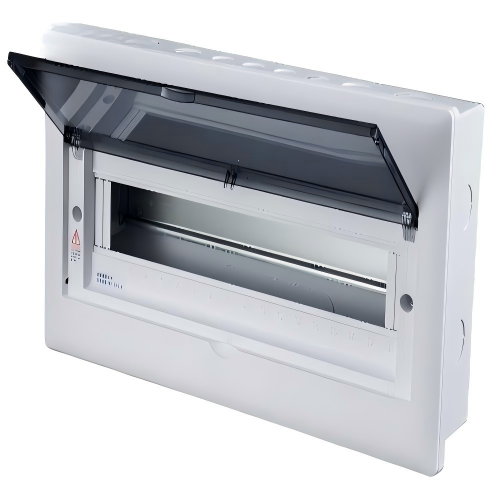
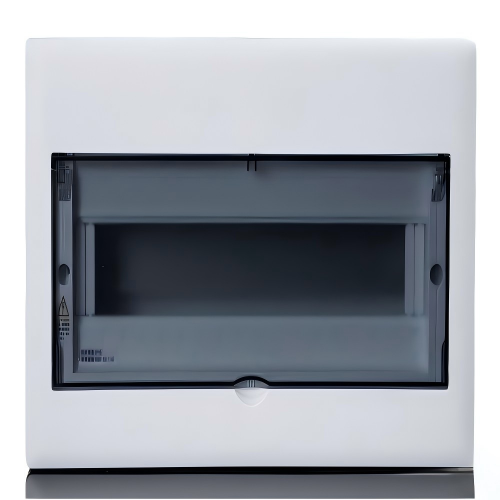
The indoor distribution box is the core device for terminal power distribution and safety protection in indoor areas such as residences, office buildings, and commercial spaces. It is mainly used for centralized control of indoor circuits, overload protection, short-circuit protection, leakage protection, and line routing management, to ensure electrical safety, prevent electrical fires and electric shock accidents, and facilitate daily maintenance and power-off operations.
1. Product Structure and Composition
The indoor distribution box is generally composed of a box body, a box door, installation rails, circuit breakers, leakage protection devices, neutral terminal, grounding terminal, busbar, identification components, etc.
The box body is mostly made of cold-rolled steel or flame-retardant ABS engineering plastic, which has high strength, good insulation, and corrosion resistance;
The core switches inside are micro circuit breakers (air switches) and leakage protection circuit breakers, respectively, to achieve branch control and electric shock and leakage protection;
The overall design is compact, the wiring is standardized, and it is convenient for installation and maintenance.
1. Product Structure and Composition
The indoor distribution box is generally composed of a box body, a box door, installation rails, circuit breakers, leakage protection devices, neutral terminal, grounding terminal, busbar, identification components, etc.
The box body is mostly made of cold-rolled steel or flame-retardant ABS engineering plastic, which has high strength, good insulation, and corrosion resistance;
The core switches inside are micro circuit breakers (air switches) and leakage protection circuit breakers, respectively, to achieve branch control and electric shock and leakage protection;
The overall design is compact, the wiring is standardized, and it is convenient for installation and maintenance.
II. Main Functions
1. Circuit Division Management: The indoor electricity is divided into separate circuits for lighting, ordinary sockets, air conditioners, kitchens, bathrooms, etc., without interfering with each other.
2. Overload Protection: When the line load is too high, it automatically trips to prevent the wires from overheating and catching fire.
3. Short Circuit Protection: In the event of a short circuit, it quickly cuts off the power supply to protect the electrical appliances and the lines.
4. Leakage Protection: A leakage protection switch is commonly used in the socket circuits. In the event of an electric shock to a person or a leakage of equipment, it quickly cuts off the power supply.
5. Power Supply Control: A main switch is equipped, allowing for the one-click cut-off of all the power in the household, facilitating maintenance.
6. Safety Isolation: The box is insulated and protected reliably to prevent accidental contact with live components.
1. Circuit Division Management: The indoor electricity is divided into separate circuits for lighting, ordinary sockets, air conditioners, kitchens, bathrooms, etc., without interfering with each other.
2. Overload Protection: When the line load is too high, it automatically trips to prevent the wires from overheating and catching fire.
3. Short Circuit Protection: In the event of a short circuit, it quickly cuts off the power supply to protect the electrical appliances and the lines.
4. Leakage Protection: A leakage protection switch is commonly used in the socket circuits. In the event of an electric shock to a person or a leakage of equipment, it quickly cuts off the power supply.
5. Power Supply Control: A main switch is equipped, allowing for the one-click cut-off of all the power in the household, facilitating maintenance.
6. Safety Isolation: The box is insulated and protected reliably to prevent accidental contact with live components.
III. Product Classification
By installation method: concealed embedded type (pre-installed on the wall, aesthetically pleasing and commonly used), exposed wall-mounted type (easy to install, suitable for renovations).
By material: metal distribution box (high strength, good heat dissipation), plastic distribution box (good insulation, high cost-effectiveness).
By circuit count: common types include 6 circuits, 8 circuits, 12 circuits, 16 circuits, 20 circuits, 24 circuits, etc. These can be selected based on the size of the living space.
IV. Technical Features
The protection level is generally IP30 to IP40, providing dust protection and preventing accidental contact.
Flame retardant and resistant to high temperatures, meeting the standards for safe indoor electricity usage.
Modular design, allowing for flexible addition and reduction of switches and convenient expansion.
Reasonable layout, ample space for incoming and outgoing wires, and neat and standardized wiring.
Long service life, capable of stable operation for a long time, without the need for daily maintenance.
V. Applicable Scenarios
It is widely used in residential buildings, apartments, villas, office buildings, shops, schools, hospitals, and renovation projects of old residential areas, serving as essential basic distribution equipment in modern building electrical systems.
VI. Core Advantages
The indoor distribution box has a compact structure, is safe and reliable, easy to install, and simple to use. It can effectively standardize the indoor distribution system, enhance electrical safety, reduce the risk of electrical accidents, and is a key device for ensuring safe electricity usage in households and indoor areas.
By installation method: concealed embedded type (pre-installed on the wall, aesthetically pleasing and commonly used), exposed wall-mounted type (easy to install, suitable for renovations).
By material: metal distribution box (high strength, good heat dissipation), plastic distribution box (good insulation, high cost-effectiveness).
By circuit count: common types include 6 circuits, 8 circuits, 12 circuits, 16 circuits, 20 circuits, 24 circuits, etc. These can be selected based on the size of the living space.
IV. Technical Features
The protection level is generally IP30 to IP40, providing dust protection and preventing accidental contact.
Flame retardant and resistant to high temperatures, meeting the standards for safe indoor electricity usage.
Modular design, allowing for flexible addition and reduction of switches and convenient expansion.
Reasonable layout, ample space for incoming and outgoing wires, and neat and standardized wiring.
Long service life, capable of stable operation for a long time, without the need for daily maintenance.
V. Applicable Scenarios
It is widely used in residential buildings, apartments, villas, office buildings, shops, schools, hospitals, and renovation projects of old residential areas, serving as essential basic distribution equipment in modern building electrical systems.
VI. Core Advantages
The indoor distribution box has a compact structure, is safe and reliable, easy to install, and simple to use. It can effectively standardize the indoor distribution system, enhance electrical safety, reduce the risk of electrical accidents, and is a key device for ensuring safe electricity usage in households and indoor areas.